
Driftwood Wall Art Ideas to Bring Maritime Charm to Your Home
Picture this: you're strolling along a rugged Nova Scotia beach, the tide pulling back, leaving behind weather‑worn pieces of driftwood that whisper stories of the sea. That exact moment of quiet awe is what makes driftwood wall art so irresistible – it captures a slice of the coastline and brings it inside.
Here's a quick checklist to get you started:
- Source responsibly: Look for locally gathered driftwood or choose pieces we've reclaimed in our Dartmouth workshop – it supports sustainable practices and keeps the maritime vibe authentic.
- Prep the wood: Clean any salt residue with a gentle brush, then sand lightly to smooth sharp edges while preserving the natural texture.
- Seal and protect: Apply a clear, UV‑resistant finish so the hues don't fade and the piece stays durable against indoor humidity.
- Mount thoughtfully: Use sturdy picture‑hanging hardware; for heavier slabs, consider French cleats or a wall‑mounted frame that distributes weight evenly.
One of our customers, a “Coastal Grandmother” in Lunenburg, hung a trio of driftwood slices over her kitchen table. She paired each piece with a piece from our handcrafted wooden wall art collection that echoed the same weathered texture, creating a layered, cohesive look that feels like a curated gallery.
So, does driftwood wall art sound like the missing piece in your home story? Grab a piece, follow the steps, and let the Atlantic spirit fill your walls.
TL;DR
If you're dreaming of a coastal‑inspired centerpiece, driftwood wall art lets the sea's texture and colour transform any room into a relaxed, maritime haven. Follow our simple steps—source responsibly, sand gently, seal with UV‑resistant finish, and mount securely—to create a lasting, eye‑catching piece.
1. Our Pick – Hand‑Carved Driftwood Wall Art by Atlantic Wood N Wares
Our hand‑carved driftwood wall art isn't just another slab on the wall – it's a story you can touch, a reminder of tide‑kissed mornings on a Nova Scotia shore.
Authentic maritime character straight from the Bay of Fundy
Each piece starts as a responsibly sourced driftwood log that's been roaming the coast for years. We sand just enough to keep the natural grain, then carve subtle shapes that echo wave patterns. The result feels like you've plucked a fragment of the shoreline and brought it indoors.
Hand‑crafted quality you can trust
Our artisans in Dartmouth use a UV‑resistant seal that protects colour for years. No factory‑made gloss here; the finish is applied by hand, so each panel has its own subtle variations – just like the sea itself.
Easy mounting, no‑sweat installation
Heavy pieces get French cleats, lighter slices come with sturdy picture‑hanging hardware. You won't need a contractor – just a drill, a level, and a couple of minutes.
Versatile décor that fits any style
From a minimalist white‑washed cottage to a boho‑industrial loft, driftwood wall art adapts. Browse our handcrafted wooden wall art collection for pieces that work as a single focal point or as part of a gallery wall. Because we're all about sustainable living, the wood is reclaimed, meaning you're giving a second life to something that would otherwise be waste.
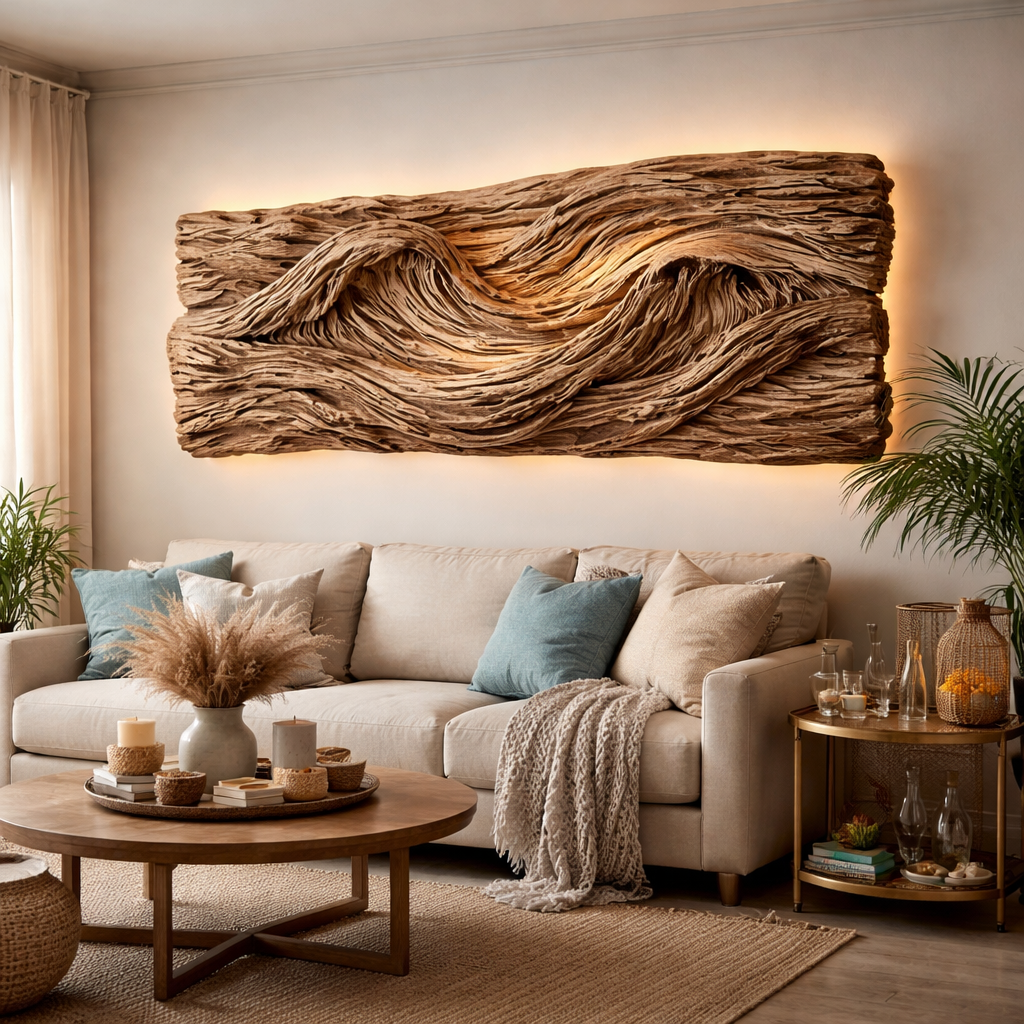
2. Rustic Nautical Silhouettes for a True Maritime Feel
Rustic nautical silhouettes are more than shapes; they're a memory of tides and wind. In our Dartmouth workshop, we hand-select weathered pieces and hand-carve or smooth only what's necessary to preserve their natural character.
-
The gentle wave form
Choose pieces whose grain curves in a way that echoes a shoreline swell. Arrange two to four panels into a soft arc so the wall reads as movement rather than still life.
-
Wind‑tossed textures, not machine smooth
Driftwood's texture is its personality. Don't sand away every fingerprint of the sea. We leave subtle ridges to catch light and bring the piece to life as you walk by. Finish with a satin UV‑resistant seal to protect against indoor humidity.
-
Shared warmth: color current
Look for hues that reflect the Atlantic—weathered grays, sun‑baked browns, a hint of salt-bleached white. Grouping tones within a wall panel creates a cohesive maritime mood.
-
Layering for a gallery-worthy focal point
Build a driftwood skyline with varying widths and heights. Use French cleats for heavier assemblies so everything stays sturdy.
-
Lighting that loves grain
Soft LED backlighting or warm track lighting can bring out the wood's grain and color shift as the day changes. Try placing a low-glow strip behind the art to emulate sunset hues.
-
Heavy art, smart mounts
For larger pieces, use French cleats or a wall-mounted frame that distributes weight evenly. Ensure weight ratings align with the wall type—drywall vs. plaster requires different anchors.
Want a deeper dive into styling coastal silhouettes? Check out this coastal wall art guide for broader ideas you can adapt to Nova Scotia's own seaside vibe. And browse our Nova Scotia maritime décor collection for handcrafted pieces that complement driftwood beautifully.
3. Minimalist Coastal Shapes that Let Light Shine Through
The Whisper‑Thin Wave Slice
Picture a long, slender piece of driftwood that curves just enough to suggest a rolling wave. Because it's thin, sunlight can slip through the natural cracks and highlight the grain. Choose a slab no thicker than 1½ inches, sand the back lightly, then mount it on a shallow French cleat so the piece hangs a few centimeters off the wall.
The Cut‑Out Circle
A round cut‑out in a driftwood panel creates a natural skylight effect. Trace a 12‑inch compass on the wood, use a jigsaw for a clean cut, then sand the edge smooth. Mount with two small hooks so the piece can tilt slightly – the tilt helps catch light from different angles.
The Stacked Rectangle Trio
Three narrow rectangles, each a different shade of weather‑worn wood, stacked vertically can act like a lighthouse beacon when back‑lit. Use thin metal brackets that keep the wood a half‑inch away from the surface and slip a warm‑white LED strip into the bracket's channel.
The Floating Slat
A single, thin slat hung horizontally can act like a modern surfboard silhouette. Position it a few inches below a high window so the slat frames the view and lets the sky spill between the wood's natural pores.
4. Mixed‑Media Driftwood Collage – Compare Materials & Finishes
Raw Driftwood – the pure Atlantic vibe
Raw, beach‑washed pieces bring the salty‑kissed patina straight into your living room. Finish options: clear UV‑resistant seal, matte polyurethane, or beeswax/Danish oil for a soft tactile feel.
Reclaimed Pine – budget‑friendly and adaptable
Reclaimed pine is often sourced from old barns or demolition sites around Nova Scotia. It's lighter than driftwood, which makes larger collages easier to hang. Try a sun‑bleached stain technique to create that drift‑wood look without hunting for actual driftwood.
Painted Wood Panels – colour‑first approach
If your décor leans toward a specific palette – think pastel blues for a coastal bedroom or deep navy for a study – painted panels give you that control. You can still incorporate driftwood strips for texture.
Resin‑Infused Driftwood – modern meets organic
Embed small driftwood shards in clear epoxy tinted with sea‑foam greens or sandy beiges. Use UV‑stable epoxy to prevent yellowing over years.
| Material | Preferred Finish | Best For |
|---|---|---|
| Raw driftwood | Clear UV seal or matte polyurethane | Coastal‑themed rooms, high‑impact texture |
| Reclaimed pine | Sun‑bleached stain + oil‑based polyurethane | Large wall installations, budget‑friendly projects |
| Painted panels | Matte chalk paint + protective clear coat | Colour‑driven interiors, modern eclectic looks |
| Resin‑infused driftwood | UV‑stable epoxy, polished edges | Contemporary galleries, statement pieces |
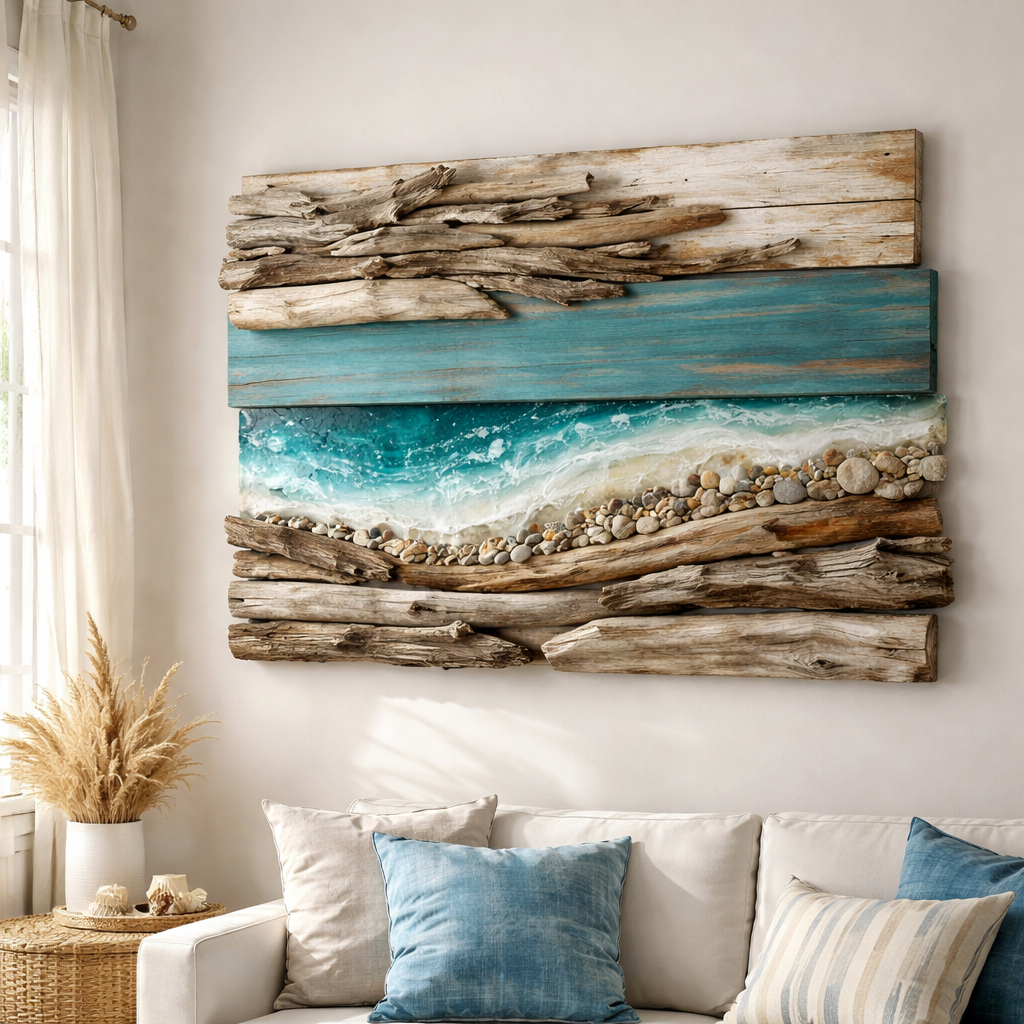
5. Personalized Family‑Name Boards – A Gift That Tells a Story
When that name is laser‑engraved or hand‑carved into weather‑worn driftwood, the grain acts like a silent narrator, reminding you of tides, seasons, and the hands that once held the piece on a Nova Scotia beach. Browse our laser-engraved wooden signs collection for personalization ideas.
Personalisation options that matter
- Include a small heart or anchor symbol beside the surname for that maritime touch.
- Add a birth‑year line underneath each name – it reads like a timeline.
- Choose a contrasting finish: a matte seal keeps the natural look, while a light satin coat makes the letters pop.
Step‑by‑step: From idea to wall
Step 1 – Sketch your layout on paper. Step 2 – Measure the board and mark lightly with a pencil. Step 3 – Choose your engraving method (hand‑carving for rustic feel, laser for crisp precision). Step 4 – Seal with a clear UV‑resistant finish. Step 5 – Mount with a French cleat for heavier boards.
6. Seasonal Driftwood Art – From Summer Waves to Autumn Tides
Summer‑Bright Wave Panels
Grab a light‑coloured slab that still shows the sky‑blue veins from a recent tide. Sand it just enough to reveal the natural grain, then seal with a clear UV‑resistant finish. Hang it in a sunroom or above a kitchen island where morning light can bounce off the wood.
Early‑Autumn Tide‑Shift Boards
When the first chill rolls in, swap to a darker, weather‑worn slab. Lightly distress the edges with a wire brush to bring out the rugged texture. A matte polyurethane coat will mute the shine, making the piece feel like a tide‑pool at low water.
Mid‑Autumn Harvest Hues
Look for driftwood that has naturally taken on rust‑red stains or that you can lightly stain with a translucent walnut oil. The wood's knots become tiny “acorns” of character, perfect for a hallway that leads to a cozy fireplace.
Seasonal Styling Tips
- Rotate colour palettes – swap a clear‑seal summer piece for a stained autumn one every 2‑3 months.
- Adjust lighting – cooler LED tones for summer, warm amber bulbs for fall.
- Mind the moisture – autumn brings more indoor humidity; a light re‑coat of oil protects the grain.
- Layer with seasonal accessories – sea‑glass vases in summer and maple‑leaf garlands in October.
Conclusion
We've walked the shoreline of driftwood wall art together, from sourcing that weather‑worn slab to swapping finishes with the seasons. Pick responsibly sourced wood, sand just enough to let the grain breathe, seal with a UV‑resistant coat, and hang it where the light can play.
Ready to let the Atlantic's rhythm become part of your home story? Explore our handcrafted wooden wall art collection and find the piece that speaks to you.
FAQ
How do I pick the right size of driftwood wall art for my living room?
Measure the wall space and leave about 10–15% breathing room on each side. A slab that's roughly two‑thirds the width of the wall feels balanced. If you have a cosy nook, go for a single 30‑inch piece; for an open‑plan area, a larger 48‑inch panel or a grouped gallery works beautifully.
What finish should I use to protect driftwood wall art in a high‑traffic hallway?
A satin‑sheen UV‑resistant seal is the sweet spot – it guards against sunlight fading while keeping the natural texture visible. Apply a thin coat, let it dry 24 hours, then add a second layer for extra durability. Re‑coat annually, especially after humid seasons.
Can I hang driftwood panels outdoors on a patio or garden wall?
Absolutely, but treat them like outdoor furniture. Choose pieces that have already been weather‑sealed, then mount them with stainless‑steel brackets or a French cleat rated for exterior use. A clear marine‑grade epoxy finish adds extra protection against rain and salty air.
What mounting method is safest for a heavy driftwood centerpiece?
For anything over 15 pounds, a French cleat system distributes weight across a larger wall area. Attach one side of the cleat to the back of the panel and the matching side to a wall stud using 3‑inch wood screws.
Is it okay to use LED strip lighting behind driftwood art?
Yes, LED strips are perfect because they emit low heat. Install a thin channel behind the panel, run the strip along the top edge, and dim it to a soft glow for evenings. A warm‑white setting mimics a sunset in autumn, while a cooler daylight hue highlights the grain during summer.
How do I clean and maintain driftwood wall art without damaging the finish?
Dust with a soft, dry microfiber cloth weekly. For occasional smudges, lightly dampen the cloth with water and a drop of mild dish soap, then wipe gently and dry immediately. Never use abrasive cleaners or spray liquids directly on the wood. Re‑apply UV‑seal annually to revive the natural shine.


