
Crafting Timeless Carved Wood Wall Art for Your Home
Picture this: you walk into a living room and the first thing you notice isn't a couch or a lamp, but a piece of carved wood wall art that seems to whisper stories of the sea.
That moment? It's the feeling of stepping onto a dock in Dartmouth, hearing gulls, and seeing a hand‑crafted fish silhouette hanging above the mantle. It's not just décor; it's a memory you can touch.
Most folks think wood art is heavy, hard to hang, or looks like a museum relic. But we've learned that a well‑designed carving can be light enough for a rental apartment and still pack a punch of personality.
So, why do we keep reaching for carved wood wall art? Because it adds texture, warmth, and a splash of local heritage without shouting. It fits a farmhouse kitchen, a coastal hallway, or a modern office with a nod to tradition.
Think about your own space. Do you have a blank wall that feels empty? Imagine a wooden salmon swimming across the wall, its scales carved by hand, each line showing the care of a Nova Scotia artisan.
We've seen new‑home buyers in their first cottage pick a single piece of carved wood wall art as the focal point, then build the rest of the room around it. It's a simple trick that makes the whole space feel curated.
And if you're hunting for a thoughtful gift? A carved wooden sign with a family name or a custom quote can become a heirloom that lasts generations.
In the next part of this guide we'll explore how to choose the right style, size, and placement so your carved wood wall art works for you, not the other way around.
Understanding the Maritime Aesthetic in Carved Wood Wall Art
When you first see a piece of carved wood wall art that feels like a sea breeze, you know the maritime aesthetic is doing its job.
It starts with the wood. We choose pine or cedar that already has a warm, golden tone, then let the grain show through the carving. Natural knots become tiny islands, like driftwood on a Nova Scotia beach.
Motifs matter. A simple fish silhouette, a lighthouse outline, or a rope‑knot pattern instantly says coast. We keep paint to a light wash of weathered gray or soft blue, so the piece stays light enough for a rental.
Here's a tip: when you hang a carving above a mantel, leave a few inches of empty wall above it. That breathing room mimics the open sky over the Atlantic and prevents the art from feeling cramped.
Color palettes in maritime design stay grounded in nature. Sea‑foam greens, muted blues, and sandy neutrals pair best with warm wood. Choose a wall shade that complements rather than competes, so the carving stays the focal point.
Size is another secret. A single 20‑inch salmon works in a hallway, while a 40‑inch lighthouse anchors a living‑room wall. Pair a big piece with smaller accents like a carved shell or tiny starfish to keep the gallery balanced.
In the end the maritime aesthetic isn't about flash. It's the quiet hum of the ocean, the scent of pine, and the story of a local artisan shaping wood by hand. When you bring that into your home, you're not just decorating—you're inviting a piece of the coast to live with you.
Choosing the Right Wood and Materials for Carved Wall Art
Choosing the right wood is the first step to a piece that feels like it belongs in your home.
Soft woods like pine, basswood, or butternut give you a gentle grain that carvers can shape without fighting the material. They're light enough to hang in a rental apartment and they stay stable when the humidity shifts.
Hardwoods such as oak or walnut bring a richer colour and a denser feel. They're perfect for a statement piece over a fireplace where you want the carving to hold up to years of family traffic.
Match the wood to the room
Think about where the art will live. A breezy kitchen near a window benefits from cedar – its natural oils repel moisture and the wood will age with a soft patina that echoes a seaside boardwalk.
For a cozy bedroom, a light pine panel lets the space feel airy while still giving that tactile warmth you love to run a hand over before sleep.
Consider the finish
A clear oil or beeswax seal protects the carving and lets the grain breathe. It also adds a subtle sheen that catches the light just right when the sun streams through a window.
If you prefer a splash of colour, a water‑based stain in muted sea‑foam or drift‑wood gray can tie the piece to your coastal palette without looking flashy.
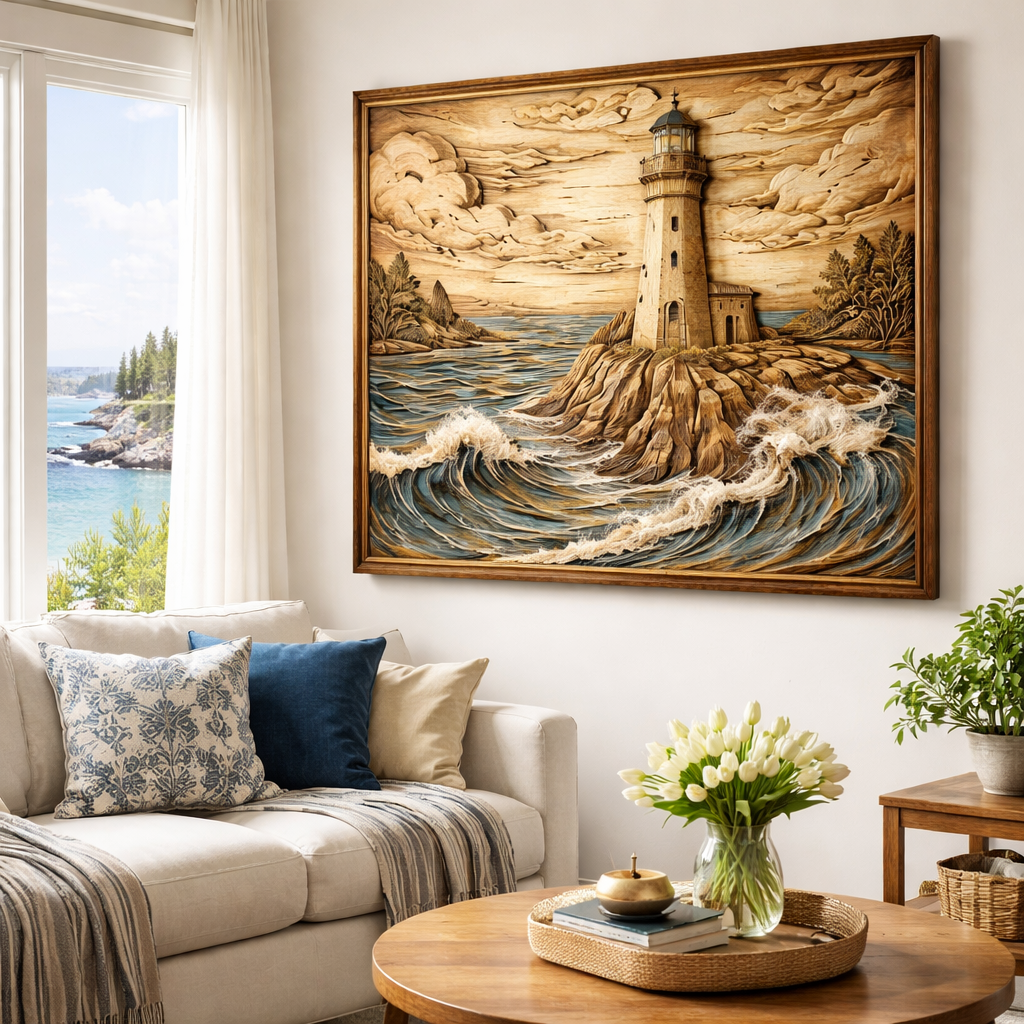
One tip many of our customers swear by: let the wood rest for a day after finishing before you hang it. The finish settles, and the piece settles into the room's rhythm.
If you're buying ready‑made pieces, look for signs of quality: a smooth, sanded surface, tight joints, and pre‑installed hanging hardware. At Atlantic Wood N' Wares we hand‑select each board, match the wood to the design, and test the weight before it leaves the workshop.
Designing a Custom Piece that Reflects Nova Scotia's Coastline
Imagine standing on the Halifax waterfront at sunrise. The light hits the water just right, and you think, “I want that feeling on my wall.” That's the spark for a custom carved wood wall art piece that mirrors the coast.
First, pick a shoreline story. It could be the jagged cliffs of the Bay of Fundy, a lone lighthouse on a rocky outcrop, or the gentle curve of a sand‑filled beach.
Step 1: Choose the right wood
Nova Scotia's salty air can be harsh, so we usually start with cedar or pine. Cedar resists moisture and ages to a soft gray, perfect for a lighthouse silhouette. Pine stays light, making it easy to hang in a cottage or condo.
Step 2: Sketch the outline
Grab a scrap of paper and draw the coastline in a simple line drawing. Once the sketch feels right, transfer it to the wood with a light pencil. You'll notice the grain already suggesting waves; let those natural lines guide your carving.
Step 3: Carve the base shape
Start with a gouge that matches the depth you need. Carve slowly, following the grain to avoid splintering. Watch the piece as it grows – you might see a knot that looks like a tiny island. Leave it in. Those imperfections are the charm of maritime wood art.
Step 4: Add details and texture
Now add finer elements: a tiny boat, a seal, or a sea‑grass fringe. Use a smaller V‑shaped gouge for these bits.
Step 5: Finish for durability
When the carving feels complete, sand with fine‑grit paper until the surface is smooth but still tactile. Apply a low‑VOC oil or beeswax to protect the wood from humidity.
Step 6: Hang it right
Measure eye level – roughly 57‑60 inches from the floor – and mark where the hardware will go. Need inspiration? Check out our Handcrafted Wooden Wall Art & Rustic Décor collection for examples that blend coast‑line motifs with sturdy finishes.
Comparing Popular Carved Wood Styles – From Rustic to Refined
Carved wood wall art splits mainly into rustic charm and refined minimalism. Knowing the difference lets you pair the piece with your space without guesswork.
Rustic charm
A log‑shaped sign, a hand‑carved lobster trap, or a pine panel with knotty islands all showcase grain front‑and‑center. A light oil finish lets the wood breathe, making it perfect for farmhouse kitchens or a cozy living‑room nook.
Refined minimalism
Imagine a smooth walnut rectangle, a sleek geometric fish, or a cedar slice washed in sea‑foam. Clean lines and a soft sheen let the carving act like architecture rather than a souvenir.
Hybrid approaches
If you crave the knotty warmth of pine but also want a clean edge, a mixed‑media piece can bridge the gap. Reclaimed wood combined with a painted accent is a favourite for coastal homes.
| Style | Typical wood | Visual traits | Ideal room |
|---|---|---|---|
| Rustic charm | Pine, reclaimed barn wood | Visible grain, knots, natural oil finish | Farmhouse kitchen, living‑room nook |
| Refined minimalism | Walnut, birch, cedar | Smooth surface, clean lines, muted colour | Modern loft, bedroom, hallway |
| Hybrid | Mixed pine + painted accent or metal inset | Blend of texture and sleek edge | Coastal cottage, open‑plan living area |
Caring for and Maintaining Your Carved Wood Wall Art
Wood is alive. It breathes, it swells, it dries. If you treat it right, it will stay warm for years.
Keep it Clean
Dust is the enemy of any wooden piece. A soft feather duster or a dry cloth sweeps away grit without scratching the grain. For deeper grooves, use a clean paintbrush and follow the grain direction. Avoid a damp rag – water can seep into the wood and cause swelling.
Control Light and Humidity
Sunlight loves to fade colour. Place the carving where only indirect light falls. Too much moisture is another troublemaker – keep the piece away from kitchen steam, bathroom humidity, or open windows on rainy days.
Seasonal Touch‑Ups
Every six months, give the carving a light coat of beeswax or a low‑VOC oil. Just rub a small amount with a soft cloth, let it sit for a few minutes, then buff away any excess.
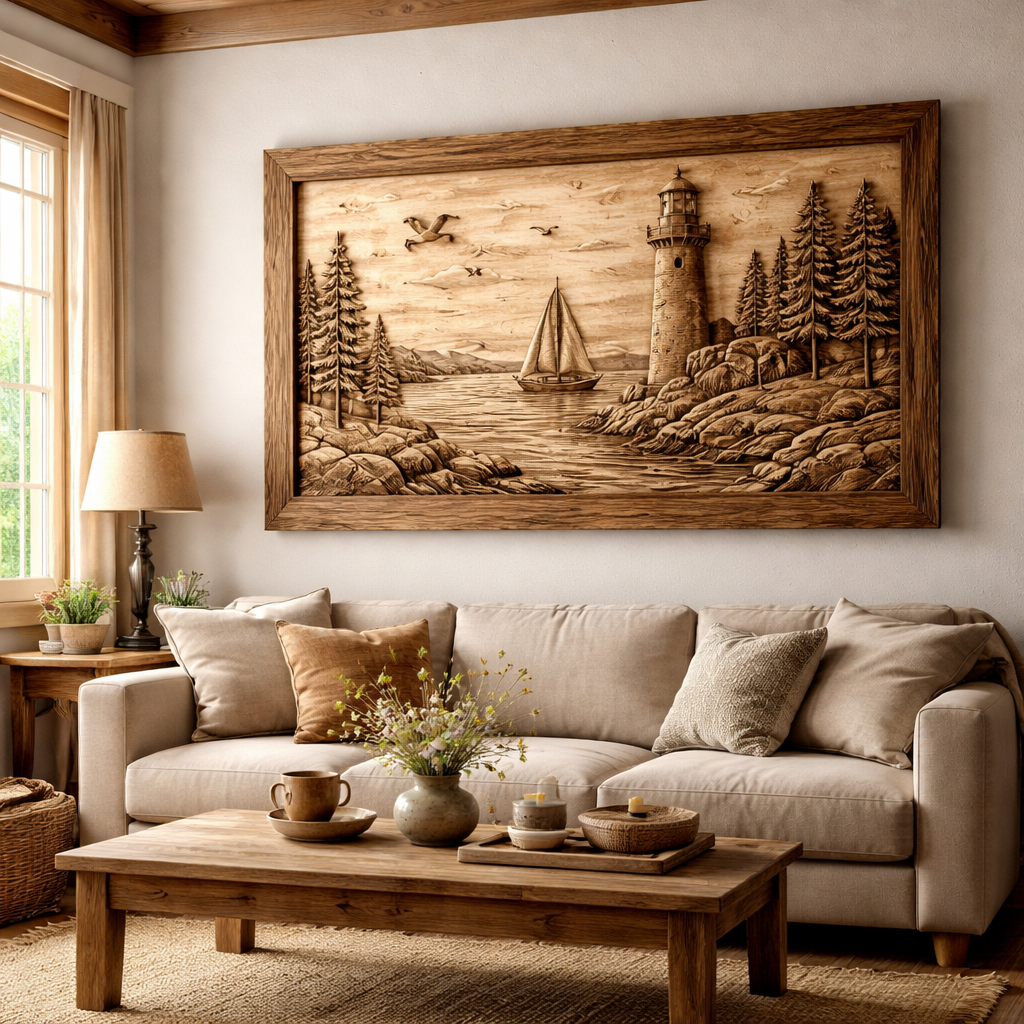
Personalizing Your Carved Artwork for Gifts and Special Occasions
There's something magical about a carving that carries a name, a date, or a tiny map of a place you love. It turns a simple wall piece into a memory you can hold.
Most carved wood wall art can take a line of text, a name, a short quote, or even GPS coordinates. Keep the wording short – the wood shows every cut. Browse our custom laser-engraved wooden signs for personalization ideas.
Checklist for a flawless gift
- Measure the wall space – leave about 2‑3 inches of breathing room around the piece.
- Mark eye level (57‑60 inches from the floor) for the centre of the carving.
- Use a stud finder if the piece is over 5 kg; otherwise wall plugs work.
- Apply a light coat of beeswax after hanging to protect the finish.
Sourcing Ethical Canadian Wood and Supporting Local Artisans
When you buy from a local artisan, you're keeping a skill alive that's been passed down for generations. Our shop, Atlantic Wood N' Wares, works directly with Dartmouth studios and shares a slice of the profit back to community projects like the IWK Foundation Sofia Daisy Campaign.
What to check before you buy
- Certification: FSC or local seal.
- Source story: Does the seller tell you which forest the wood came from?
- Craftsman's background: Years of experience, local ties.
- Finish safety: Low‑VOC oils or beeswax that won't hurt indoor air.
FAQ
How can I tell if a carved wood wall art piece is made locally in Nova Scotia?
Look for a label that says “Made in Nova Scotia” or a certification code you can check on the maker's website. A local artist will usually share the story of the wood – where the tree grew, how it was cut, and who carved it.
What size should I pick for a living‑room wall?
A piece that takes up about one‑third of the wall width feels balanced. If your wall is 12 feet wide, a 3‑ to 4‑foot carving works well. Hang the centre at eye level – roughly 57‑60 inches from the floor.
How can I hang a heavy carving safely?
Use a sturdy picture hook rated for the weight, anchored into a wall stud. For extra security, add a short wooden cleat on the back of the piece and a matching bracket on the wall.
How do I keep the wood from fading in sunlight?
Place the carving where it gets only indirect light. Apply a thin coat of low‑VOC wax every six months – it acts like a shield and brings out the natural colour.
Can I personalize a carved wood wall art piece with a name or date?
Yes – most artisans will carve a short line of text into the panel. Keep the wording brief and choose a simple font that matches the style of the carving.
Is reclaimed wood safe for a home with kids or pets?
Reclaimed wood is usually sanded smooth and finished with a non‑toxic oil or wax. Look for a finish that's low‑VOC and food‑grade if you expect little hands or paws to touch it.
Conclusion
You've seen how grain, finish, and placement shape a piece of carved wood wall art. Pick a wood that matches your room, choose a simple finish, and hang it at eye level.
Step one: decide the story you want – a lighthouse, a wave, a simple knot. Step two: match the wood. Pine for a light feel, cedar for moisture, walnut for a richer look. Step three: protect it with a low‑VOC oil or beeswax, then let it rest a day before hanging.
Ready to bring a slice of Nova Scotia's coast into your home? Explore our handcrafted wall art collection and start the story today.


